Thursday, May 24, 2012

Classroom Centres - Block Area

Source: http://www.childrenscornerpreschool.com/block_2.jpg

There are some areas in the classroom that every centre likes to have.  One of the most popular centres of all is the Block Centre.

Here are some things I have always included in the block area in my classroom. Please suggest any other items that you have experience with that I can add to my blog. Thanks!

- Wooden blocks

Source: http://image.made-in-china.com/2f0j00uvIQDtYBRGol/100-Pcs-Wooden-Blocks-2005-.jpg


- Cardboard boxes/Recyclable Material

Source: http://fantasticfifthgrade.files.wordpress.com/2012/04/dsc03379.jpg

- Foam boxes

Source: http://www.p-wholesale.com/upimg/20/793a1/foam-blacokfoam-toys-569.jpg

- Brick-shaped/coloured boxes 

Source: http://1000moments.net/wp-content/uploads/2008/11/dsc05637-1.jpg

- Cars/Transportation

Source: https://blogger.googleusercontent.com/img/b/R29vZ2xl/AVvXsEgWh3N8YC_JsfgN_KzNqn_yixygWLEtLDRb4F4luxadIyP2QGPDWzU9VoOgWBIgRpAYJ5u5T7QpmUMM1Qpy3dRtqG-Wwo0L-m4SL1sK0qc8KpZv0aygJGculPOXpARAVag5EJiXzRzekukx/s1600/february+2012+106.jpg

- Road Carpet

Source: http://www.tts-group.co.uk/_rmvirtual/media/tts/images/FRMAT.jpg

- Hollow blocks

Source: http://www.logertoys.com/images/images_400/ma_hollow_blocks.jpg

- Lego (Different sizes)

Source: https://blogger.googleusercontent.com/img/b/R29vZ2xl/AVvXsEhHJykGA6u13W4EwVU5ojPTkkphjWEY88fPM-dSiLvHzz6SUhq-2W37rA0nCcLNdBwd_BPYri-9TTseQyE741akWbuJqIZp4Fb-kR9o9AqpW5aul8lMev8dGogB2CQ7u-QjSFV9CW-mVzU-/s1600/Lego.jpg

- People

Source: http://childcare.scholarschoice.ca/images/products/25/Lego-Duplo-World-People-Set-N15386_XL.jpg


We see the block centres nearly in every classroom. But what is the point of having these materials? 

- They allow children to use their fine motor muscles (small fingers to perfect the skill of balance, steadiness and grip/grasp as they play with small lego pieces and the blocks)

- They learn how to perfect their gross motor muscles (large muscles in arms, legs, and the rest of the body as they pick up the large blocks).

- They learn about hand-eye coordination. This is very important for them to learn because it requires for a lot of focus through their vision to complete a task using their hands.

- They learn about building and construction.

- They learn about structures; how balance and a solid foundation is key for buildings to stay standing.

- They learn about mapping (a big part in the school curriculum) through playing with the road carpet, transportation and the rules of traffic. 

- They learn about the community (the road carpets have lots of important buildings on their such as hospitals, fire stations, police stations, schools, etc.) 

- They learn to problem solve as they figure out ways to create their work. (Specially trying to make a bridge stand without any foundation underneath!)

- So much math is involved! Structures, problem solving, mass, weight, balance and spatial skills. 

- Language is involved: creating their own stories with the blocks and being able to communicate it with their peers and teachers. 


Children love this centre. Whenever possible, teachers and parents should get down on the floor and play with the children. It further helps to develop social skills, communication skills, math skills (challenge them with building things). This adds on to cooperative and pretend play. 

Sunday, May 20, 2012

Tips for Reading Aloud

I have mentioned in a previous blog that reading aloud to children should begin when the baby is still in the womb. "An infant's hearing is wired well enough by the fifth month in utero to hear sounds outside the womb" (as written by Pam Schiller in 'Creating Readers'). Here are some tips for reading aloud to children.


Source: http://www.soulemama.com/.a/6a00d8341c4ea853ef01156fb9db90970b-500wi

1. Find a comfortable setting. Reading "nooks" or "corners" are sort of a haven for children. It is a place where they can relax and read at their own time, based on their own interests.

Source: http://i00.i.aliimg.com/photo/v0/221690262/children_book_color_educational_book.jpg


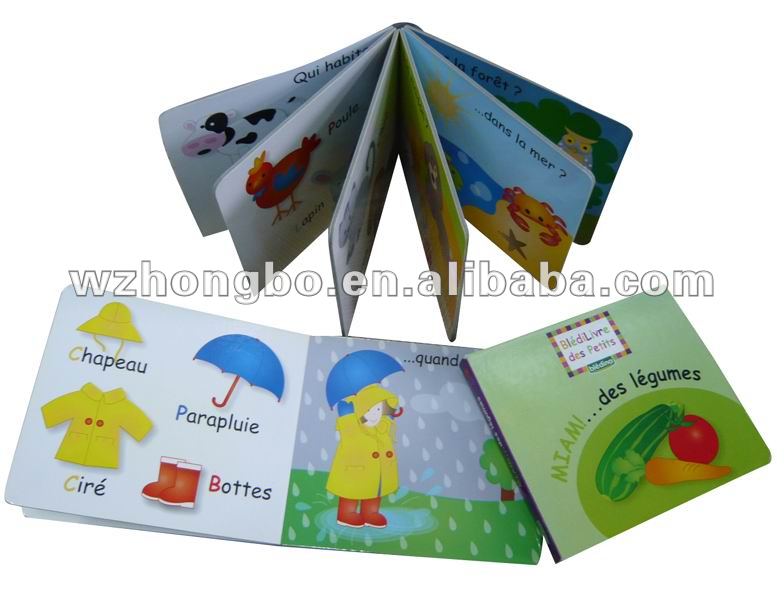
   2. Make sure children can see the pictures. Pictures are worth a thousand words. Children are able to create their own story line based on what they see in the pictures. It is one of the most important parts in learning how to read.


Source: http://www.mhl.org/kids/fun/wp-content/uploads/2009/05/bird.jpg


   3. Choose books that are appropriate for the age level of the child. Children should not be given that are too low for them because they will get bored or too high for them because they will lose their interest. 

Source: http://www.kidsbooks.ca/i/481D_3.jpg

4. Read books on diverse topics and things of interest to children. When given the opportunity to learn about diversity, children are the best audience to accept diversity as well. 

Source: http://farm5.static.flickr.com/4107/4994338886_9072242c4d.jpg

5. Build background knowledge. Let children examine the cover of the book. Give them a chance to predict what the story might be about. During reading, ask them to predict what will happen next. Ask questions about vocabulary that is new and difficult. Prediction is a big part of critical thinking.

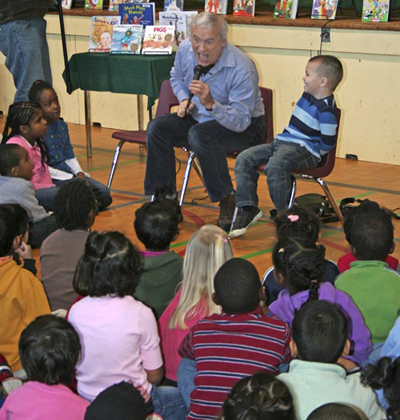
Source: http://www.torontoobserver.ca/wp-content/uploads/2008/03/25-01-08-McKay-Munsch3.jpg

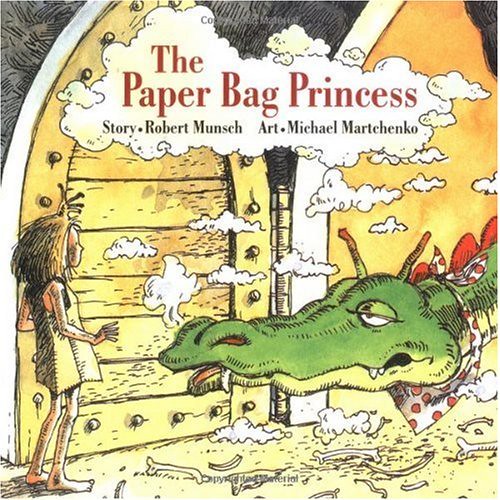
6. Use good expressions as you read, just like Robert Munsch is in the above picture! Change your tone, rhythm, level of your voice to fit the situation in the story. Be soft, quiet or excited/surprised. 

Source: http://creativecurio.com/wp-content/uploads/2008/04/ross-book.jpg

7. Re-read favourite books! If the children want to hear the same story everyday, let them. Repetition is one of the best ways for children to become comfortable with listening, predicting and reading.


* One last thing: If the child is not interested, don't continue reading. You don't have to finish reading a book that no one wants to hear*

Saturday, May 19, 2012

List of Books - Toddlers

I have posted before a reading list for infants. Now it's time for toddlers. Here it is as found in the book 'Creating Readers' by Pam Schiller:


Animal Crackers - by Jane Dyer
The Animal Orchestra - by Scott Gustafson
Barnyard Banter - by Denise Fleming
The Best Mouse Cookie - by Laura Numeroff
Big - by Keith Haring
Can You Guess? - by Margaret Miller
Dots, Spots, Speckles, and Stripes - by Tana Hoban
The Earth is Good - by Michael Demunn
Exactly the Opposite - by Tana Hoban
Eyes, Nose, Fingers and Toes - by Judy Hindley
Five Little Monkeys Sitting on a Tree - by Eileen Christelow
Flower Garden - by Eve Bunting
Frozen Noses - by Jan Carr
Good Day, Good Night - by Marilyn Singer
Growing Vegetable Soup - by Lois Ehlert
Have You Seen Bugs? - by Joanne Oppenheim
Hello Toes! Hello Feet! - by Ann Whitford Paul
Hey, Little Baby! - by Nola Buck
Horatio's Bed - by Camillea Ashforth
In the Small, Small Pond - by Denise Fleming
Inside, Outside, Upside, Down - by Stan and Jan Berenstein
Is It Red? Is It Yellow? Is It Blue? - by Tana Hoban
I Went Walking - by Sue Williams
Let's Go Visiting - by Sue Williams
Little Red Hen and the Ear of Wheat - by Mary Finch
Lunch - by Denise Fleming
Mrs Wishy-Washy - by Joy Cowley
My Five Senses - by Margaret Miller
Nature Spy - by Shelly Rotner
One Fish, Two Fish, Red Fish, Blue Fish - by Dr Seuss
Planting a Rainbow - by Lois Ehlert
Shapes, Shapes, Shapes - by Tana Hoban
Snowy, Flowy, Blowy - by Nancy Tafuri
Teddy Bears' Picnic - by Jimmy Kennedy
These Hands - by Hope Lynn Price
Time for Bed - by Mem Fox
Toddlerobics - by Zita Newcome
Up the Ladder, Down the Slide - by Betsy Everitt
Wake Up, Little Children - by Jim Aylesworth
What Makes Me Happy? - by Catherine and Laurence Anholt
When the Teddy Bears Came - by Martin Waddell
Where Does It Go? - by Margaret Miller
While You Were Sleeping - by John Butler
Who Hops? - by Katy Davis
Who Took the Farmer's Hat? - by Joan Nodset
Who Uses This? - by Margaret Miller

Monday, May 14, 2012

Fruit Smoothie Recipe

I came home today feeling really hot because of the weather. I wanted to cool down and I thought of making myself a smoothie. I LOVE my fruit smoothies. They are healthy, quick to make and a fun way to cool off. 

I also have made smoothies for kids at school. They have helped me with making them too. The kids love to make something and then later enjoy it. Here is how I make mine:

What you need:


Frozen or Fresh Fruit.
I like to use frozen because it turns out colder
and I don't need to use ice for it.
You can choose any fruit. I like
to use mixed berries or tropical fruits
(like mango, melon, cantaloupe).


Frozen Yogurt.
You can get plain one or a flavoured 
one. I like to use flavoured 
to bring out the fruity taste.


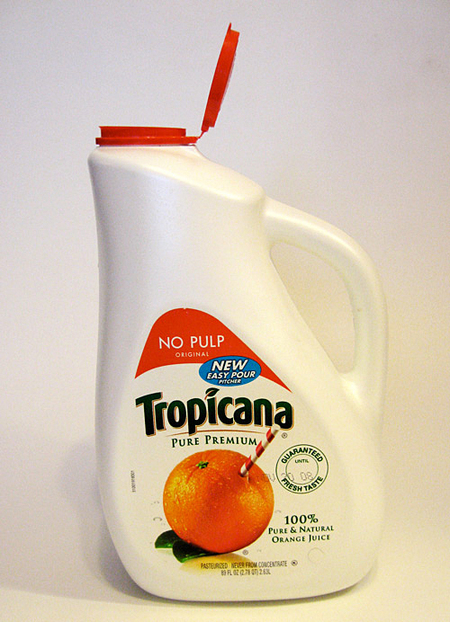
Juice.
The best kind of juice to use is
orange, pineapple or cranberry.

You also need a blender and a scoop.

Steps:


Put in your choice of fruit into
the blender. Add enough juice
so that the fruit is all covered.
Blend. 

If it is not blending well, add more juice.


Add 4-5 scoops of frozen yogurt
into the mixture. Blend.

You may have to stop after a while and blend again
with more juice. If you like yours a bit thick, like me,
don't add too much juice.


ENJOY!


My recipe does not have a specific number of servings. If I want to make lots, I add lots of fruit, juice and frozen yogurt.

This recipe can be made in the classroom with children. Make sure they are doing it with your help. It involves science, math, language, health and the most important subject: FUN!

Sunday, May 13, 2012

Saying Thank You


I love languages. I love how there are so many words, letters and sounds from all over the world that help you communicate. 


Because today is Mother's Day, I thought it would be a great idea to learn how to say Thank You in different languages. Here is a list of how to say thank you in different languages I found on the Internet. You can ask the kids to make a card and write down a few of them. It's a nice way to learn new words in different languages which improves your communication skills, language skills, further develops learning of diversity as well as build an understanding and importance of gratitude. Enjoy!

SHUKRIYA for reading :)


  • Afrikaans: Dankie
  • Albanian: Faleminderit
  • Alsatian: Merci
  • A’Leamona: Gra al or Gra [pronounced grah or grah ahl]
  • Arabic: Shokrun (pronounced Shook-run)
  • Armenian: Shnorhakalutiun
  • Bengali: Dhonnobaad (written in Bengali similar to Hindi)
  • Bosnian: Hvala
  • Bulgarian: Blagodariya
  • Buryat (Mongolian people): Hain daa
  • Chinese (Mandarin):  Xie Xie (pronouced: shyeh shyeh. Say it fast and keep it short)
  • Chinese (Cantonese):  Daw Jeh
  • Croatian: Hvala
  • Czech: Dekuju/Dekujeme
  • Danish: Tak
  • Dutch: Dank je (pronounced: dannk yuhh) or Bedankt (pronounced: buh dannkt)
  • English: Thank You
  • Filipino: Salamat
  • Finnish: Kiitos (pronounced: KEE-tos. Like “toast” without the last “t”)
  • French: Merci
  • German: Danke (dahn-kuh)
  • Greek: Euxaristo (efhar-ist-oh)
  • Hebrew: Todah
  • Hindi: Dhannayvad or Shukriya
  • Icelandic: Tack Fyrir
  • Irish: Go raibh (míle) maith agat [pronounced: gu rev (me-la) mah agh-ut]. It means: (a million) thanks to you.
  • Italian: Grazie
  • Japanese: Arigatou (informal; pronounced: A-rii-gah-to’) Domo arigato gozaimasu (formal; pronounced: A-rii-gah-to’ goh-zae-mas)
  • Khmer (Cambodian): Or Kun
  • Korean: Gamsahapnida (pronounced: gam-sa-ham-nee-dah)
  • Korean: Gomapsupnida (pronounced: go-mahp-soop-nee-dah)
  • Kurdish: Spaas
  • Lao: Khopjai
  • Lithuanian: Ači
  • Malay: Terima Kasih
  • Maltese: Grazzi
  • Nepali: Dhanayvaad (isn’t said as frequently as a thank you in English)
  • Norwegian: Takk
  • Persian (Iran): Mamnoon
  • Polish: Dziękuję
  • Portuguese (Brazil, Portugal, etc): Obrigado [if male] and Obrigada [if female]
  • Punjabi: Dhan Waad
  • Romanian: Mul umesc (pronounced: mool-too-mesk)
  • Russian: Спасибо (pronounced: spa-see-ba)
  • Slovak: Dakujem (pronounced: dyock-we-em
  • Spanish: Gracias
  • Swahili: Asante
  • Swedish: Tack
  • Tagalog (Filipino): Salamat (po) (sir/madam)
  • Tamil: Nandree
  • Telugu: Dhanyavaadaalu; Kruthagnathalu
  • Thai: Kop kun krap (if male) Kop kun ka (if female)
  • Turkish: Teºekkür ederim
  • Urdu: Shukriya (pronounced: shook-ree-ah)
  • Vietnamese: Cam On (pronounced: caam-ungh)
  • Waloon (Belgian community): Merci
  • Welsh: Diolch (mam) Amino (sir)
  • West Indian Creole:  M si
  • Xhosa:  Enkosi
  • Yiddish: A dank
  • Yoruba:  O Sheun
  • Zulu:  Ngiyabonga (literally means : I give thanks)

Happy Mother's Day - Food for Thought


Mother's Day is one of those days that moms really look forward to. Each day we take our moms for granted for all they have done. I try to tell my mom everyday that I love her but I am sure there are many days that go by where I forget (an unacceptable excuse). I love my mom to pieces and thank her for everything that she has done in her life for her family. Love you, Mom!

Many people have forgotten the point of Mother's Day. They always look at the product instead of the process of giving something. Mothers always like things that children take time making themselves. They don't care for materialistic things. My mom loved all the little cards my brother made for her when he was young. We still have some stuck on our fridge to this day (he is now 19). 

One time I was doing an activity with children and their parents and one adult (caregiver of a child) was not happy with the activity. We were decorating picture frames and jewelry boxes for moms. Some jewels were falling off and the parent was unhappy with the end result. I really want people to stop and think about this activity.

Who is this activity for: Mom
When to give it: Mother's Day
What skills are required: Fine motor skills (small finger muscles to use paint, glue, and small jewels to decorate).

Activities like these are not to focus on what to give their mom. These activities have an emotional focus: TO DO SOMETHING NICE FOR SOMEONE ELSE. Is this not what life is about? To appreciate others for their work, to thank them for all they have done, to acknowledge the person for who they are and what they have done for you. It is a time for thanks. It's sort of like Thanksgiving. You are thankful for everything in your life. It doesn't mean let's cook turkey and fill our tummies until we cannot move. 

People have forgotten the point of special occasions and I don't feel that it is okay. Yes, we should be thankful everyday for these things. However, these days were created for a reason. To celebrate something we take for granted. So why are we taking these days for granted as well? It is food for thought!

Best things to give moms are things she WANTS and not NEEDS. Things that are meaningful and have a purpose. Things that show your love and affection for her. Handmade things are absolutely fabulous. I made jewelry boxes for my mom and my grandmothers and they were SO happy. Yes, some jewels fell off but they all have those boxes beautifully set in their rooms and I see them smiling at them when they think no one is looking. The box itself means nothing; the idea and thought of the gift, though, is a reminder that they are loved and appreciated. That is the beauty of doing something nice for someone else. 

Saturday, May 12, 2012

Making Your Own Tactile Books!


A lot of parents and teachers talk about how expensive books are these days. I can agree to some extent but I also think a great book is worth paying the extra few bucks. On the other hand, who doesn't like to save money!?


My good friend Nothy has shared two very helpful links if you would like to make your own tactile books for infants and toddlers. If you are an artsy person and love to sew, these links are for you. If you would like to pursue a new love for sewing, then this is for you too. Please check out Nothy's blog Aft Agley where she shares so much information, knowledge and ideas about sewing! It is worth your while.

Here are the links for creating your own books:

Related Posts Plugin for WordPress, Blogger...