Showing posts with label Preschool. Show all posts

Friday, October 11, 2013

Family and Me Art Activity: Who Lives in my Home

Our Kindergarten program is Play-Based which means teachers plan specific activities based on the interest of the children. In the first couple weeks of school, one of my students asked: "Can we talk about families, please?" This allowed us to take that question and turn it into a week of 'Family and Me' themed activities.

One of the activities we did was called Who Lives in my Home. I took many different art materials: fabric, construction paper (different shapes and sizes), tissue paper, stickers, popsicle sticks, cotton swabs, lick-it circles, pipe cleaners, crayons, coloring pencils, markers, and glue.


I made a template of a house and traced it onto different colored construction paper.


Here are some samples of what my students made. They came out SUPER cute!


Friday, June 21, 2013

Online Reading Links

As teachnology is on a constant rise, children are spending more and more time with it. I am taking courses in my Masters about incorporaring technology not just in the classroom but also at home. Here are some links that children and families can access on their computers. I have yet to try them on tablets or iPads but they definitely work on the computer.


Tumble Books has an online collection of e-books for children and families (focus on elementary schools).


Children have choices in parts of Clifford stories making it interactive and fun for kids.


Little Critter stories online.


Screen Actors Guild Foundation (SAG) is  an online streaming video program featuring SAG members reading children’s books aloud.

Wednesday, June 19, 2013

Kids Yoga Adventures

I was covering planning time for another teacher this week and in her Kindergarten class, the children did Yoga watching these videos. I can't believe I didn't know about them earlier! There are many episodes that you can do on different days or even for the whole week if it matches your theme. They are great for indoor physical activity time (as they are about 15 minutes long) and keep the children busy! Here are some links with the themes for a quick search!

Ocean Adventure


Circus Adventure


An Australian Adventure


Arctic/Penguin Adventure


Polar Bear Adventure


Bee Adventure


Space Adventure


Faritytale Adventure

Thursday, May 23, 2013

19 Storytelling Techniques

http://www.clker.com/cliparts/2/R/E/V/j/Q/reading-story-book-to-kids-md.png
I have been meaning to write a post about storytelling techniques for quite sometime. I have finally gotten a few minutes in my super busy schedule to come up with one! Here is a list of a few techniques I have used and some I haven't (but learned about them when I was doing my undergrad). Enjoy! Oh, and please post some other ideas that you know of or use in your classroom!


Felt Stories


Tell a story using felt! It allows for great visuals especially for books that may have patterns. An example of how I did a felt story can be found here: Silly Sally - Felt Storytelling Technique

Finger Puppets

http://www.csc.gov.sg/html/newsletter/aug2006/augpictures/FINGERPUPPET.jpg

Using finger puppets are so engaging! Use them while you are reading or tell a story without the book. Works wonders each way! A fun story that I always like to do is The Three Little Pigs. 

Puppet Show

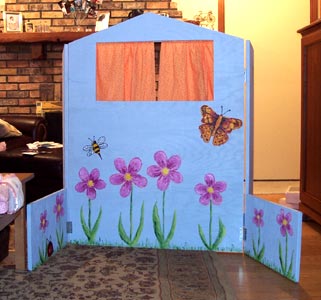
http://blog.ljcfyi.com/ljcsProjects/craftiness/puppetShow1.jpg

Oh my! What a fantastic idea to create your own puppet theatre! Use one of those 3-panel presentation boards (they cost around 8 dollars from Staples)! Got this picture from Google images and has now inspired me to create my own puppet theatre!

Stick Puppets

http://www.thevirtualvine.com/images/nurseryrhymes/heydiddlediddle/stpup.jpg
Tell a story with stick puppets. Just as much fun as any other technique! Remember, any of these techniques work with poems and songs as well!

Cut a Story

http://www.countryliving.com/cm/countryliving/images/cut-shape-0908-de-38555813.jpg
As you read the story, cut out a shape that may represent the shape. For example, "The girl was waiting for a valentine to arrive"; You can cut the shape of a valentine as you tell the story.

Draw a Story
and
Create a Class Story


Okay, I LOVE using this technique. That is a story that I drew in my classroom this year on the whiteboard. It can also be done on chart paper and then posted in the room. I chose to do it on the whiteboard. My students actually came up with this whole story on their own. Each child was given the opportunity to create the story. We started in a circle. One student gave one sentence. And the next student gave the next sentence of the story. We came up with this class story. Then they went to the desks and drew a picture of what their creation of the story was. It also became a class storybook! 

Real Props


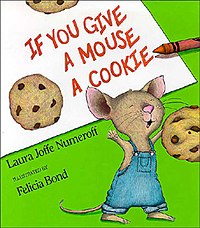
http://upload.wikimedia.org/wikipedia/en/thumb/3/3c/If_you_Give_a_Mouse_a_Cookie.jpg/200px-If_you_Give_a_Mouse_a_Cookie.jpg

This is one my most favourite stories! I have used this technique many times during my teaching experience. I used the book If You Give a Mouse a Cookie by Laura Numeroff. I bought all the props (from the dollar store) needed from the story and put them in order of the story in the basket. As I read the story, I pulled out the item/prop and laid it in front of me. The kids love it and so do I!

Role Play

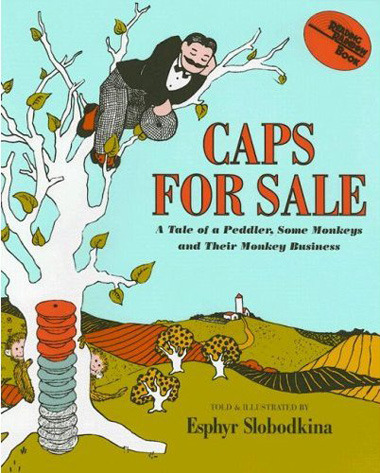
http://25.media.tumblr.com/tumblr_m2snatNJc81rsthpao1_400.jpg
Role play the story! You can add students as you go along. I did it with my students and they loved it! Caps for Sale is awesome to read! Grab a bunch of hats as props and you're good to go!!! Here we can build role playing and theatre skills!

Storybox Technique


http://www.margiepalatini.com/wp-content/uploads/2010/04/moosetache.jpg

Fun way to have a few props in the box. An easy carry-with-you-anywhere box with all the things you need for the story. Check out my post Moosetache to find out how I did mine!

Musical Instruments

http://www.kidstylefile.com.au/wp-content/uploads/2008/05/kidsgiftlist_musical-instruments.jpg

http://studio3music.com/wp-content/uploads/2009/07/mortimer.jpg

Simple! Use musical instruments while you tell your story. Mortimer is a great one to use. Check out my post to learn more about how I used Mortimer in my classroom. 

Clothesline

http://www.harpercollinschildrens.com/harperchildrensImages/isbn/large/9/9780694010769.jpg
https://blogger.googleusercontent.com/img/b/R29vZ2xl/AVvXsEjXYtAljoZzFP268vrL8f4PizjKIyNdlVMK2q6pIRBc-G2uBvhzvHConQAzZ1qsNaoT1a8LAKGyatacghWofiaaFxkpD3yl4jkJiCaXLiOoNbpbb8lJp8EnEk50OTYfqQSJX07Bk9EIGyWL/s1600/Mrs+McNosh+007.JPG
Get a strong clothesline. Buy some clothespins. Get pictures for the story (make from felt or photocopy the pages of the book and laminate them for forever-use). As you read the book, ask a child to put the corresponding item on the clothesline. This book is fantastic for it! 

Flashlight Fun

http://mindcemetery.net/wp-content/uploads/2011/09/kid-with-flashlight.jpg
Reading a story is SO much fun with the lights turned off and blinds shut. Make the room dark and turn on a flashlight!!! I love this technique. So much fun to do at any time of the day. Gives children a change and lets them know that reading can be done during the night as long as you have a flash light!!


Large Books

http://www.makeandtakes.com/wp-content/uploads/2007/06/big-books-008.jpg
Large books are great because the kids can see the pictures and words in a much bigger size! Awesome to listen to!

Other techniques can include: Singing chants during a story/song (We're going on a bear hunt), Physically participating (stamping feet, clapping hands), Use stuffed animals to tell a story, Word Cards/Pictures (when they hear a part of the story, they hold up their card/picture), and Hear and Respond (every time they hear a certain word, they must respond with an action/chant. Ex., "little frog" say ribbit ribbit or jump 3 times). 

Saturday, May 11, 2013

Math Songs for Kindergarten, Preschool and Toddlers

worlds_best_kids_songs.jpg


Using songs on the computer are great for children as they are both auditory and visual. It allows for children to see and hear at the same time and it helps build concept skills as they are given the opportunity to put two and two together. For example, if they only hear the song with numbers, they will learn them as rote and won't know what it means. With visuals, and with time and practise, they will learn one-to-one correspondence. Here are some math songs I use in my classroom daily as they are fun and very educational. You will find shapes, Numbers, Colors, and Patterns, all part of Math!

Also, check out my Phonics Song For Kindergarten post here.

Shapes Song

Shapes Song 2

Number Song (1-10)

Number Song 2 (1-10)

Big Number Song (1-100; Bigger Numbers)

5 Little Ducks

10 in the Bed

Butterfly Colors Song

Butterfly Colors Song 2

Train Colors Song

AAB Pattern Song

Monday, May 6, 2013

Phonics Songs for Kindergarten, Preschool and Toddlers

http://www.femail.com.au/img/worlds_best_kids_songs.jpg

Listening to songs has always been a hit in a Kindergarten classroom. But listening AND watching them is an even bigger hit!!! 

Here are some links I always use in my classroom to help children with phonics. If you have younger ones, this is a fantastic way to get them started. It's fun and the children pick up quickly the sounds and words that begin with the sounds. In just a week, my students had started to come up with their own words that began with each letter even though the video gives only a few examples.
Most of the links that are teacher friendly, child friendly and parent friendly are by KidsTV123 (username on YouTube). ENJOY! Please also note KidsTV123 uses ZED and ZEE versions in different videos. If you search the specific sounds for the letter Z, they will show up!

Also, check out my post for Math Songs for Kindergarten here.


Wednesday, May 1, 2013

Meet Raja


I don't know why I haven't posted anything about my pet bird, Raja. Raja means Prince in Urdu. He is an Australian Budgie and he has been with us for a little over 5 years. 

He is super friendly. He loves to sing and tweet. And he is just really, really cute!!! Oh, and he is a bit of a show off which is why he is super friendly!

We let Raja fly around in the house at times. He likes to take about  4-5 rounds around the kitchen and the living room and then he sits back in his cage.

In the cage, I have some bells for him, a swing and a couple of mirrors. He loves anything shiny so he is crazy about the mirror.


Raja loves walking on shoulders and arms. And he loves sitting on my finger. Every time I put my thumb up to his beak, he kisses it...so cute!!

I have taken him many times into different classrooms for the students to see. They love to observe him and listen to him when he is tweeting. It is a great way to spark an interest in pets, animals and science all at the same time.


For an art activity, I bought feathers from the dollar store and put it with paint on the art table. The children loved painting with feathers. Super fun activity.

On the science table, I took some feathers and put them with magnifying glasses. The students had a great time observing the feathers and feeling the feathers. I also put out white paper and crayons if they wanted to draw some feathers. 

For the play dough table, I was lucky enough to have cutters in shapes of birds. The children loved recreating Raja with play dough (I also used green play dough so it seems more realistic). 

My students drew pictures, painted pictures, built bird houses and wrote stories about Raja. They love it when he comes for a visit. Has anyone else taken their house pets for a school visit?

Friday, May 25, 2012

List of Books - Preschoolers and Kindergarteners


Source: http://www.epikardia.com/images/kindergarten%20girl%20reading.jpg

The list of books for infants and toddlers have been done. It is time for a very short list for preschoolers and kindergarteners! These books are the most favourite books for this age group of all time.

Be sure to check out the other lists:
List of Books - Infants
List of Books - Toddlers

and the post Tips for Reading Aloud

Abiyoyo - by Pete Seeger
Alexander and the Terrible, Horrible, No Good, Very Bad Day - by Judith Viorst
Bedtime for Frances - by Russell Hoban
Blueberries for Sal - Robert McCloskey
Bread and Jam for Frances - by Russell Hoban
Brown Bear, Brown Bear, What do you see? - by Bill Martin, Jr.
Can I Keep Him? - by Steven Kellogg
The Cat in the Hat - by Dr. Seuss
Changes, Changes - by Pat Hutchins
Chicka Chicka Boom Boom - by Bill Martin, Jr.
Chicken Little - by Steven Kellogg
Corduroy - by Don Freeman
The Doorbell Rang - by Pat Hutchins
The First Snowfall - by Anne and Harlow Rockwell
Flossie and the Fox - by Patricia McKissack
Flying - by Donald Crews
Frog on His Own - by Mercer Mayer
Goldilocks and the Three Bears - by Jan Brett
Green Eggs and Ham - by Dr. Seuss
Hello Kangaroo - by Nan Bodsworth
Henny Penny - by Paul Galdone (illustrator)
I Don't Want to go to School - by Christine Harris
If You Give a Mouse a Cookie - by Laura Numeroff
If You Give a Pig a Pancake - by Laura Numeroff
Imogene's Antlers - by David Small
Island of the Skog - by Steven Kellogg
It's Pumpkin Time - by Zoe Hall
Jamberry - by Bruce Degen
The Judge - by Margot and Harve Zemach
Just like you and Me - by David Miller
Koala Lou - by Mem Fox
Leo the Late Bloomer - by Robert Kraus
A Letter to Amy - by Ezra Jack Keats
Look Book - by Tana Hoban
Make Way for Ducklings - by Robert McCloskey
The Mitten - by Jan Brett
Mouse Paint - by E.S. Walsh
The Napping House - by Audrey and Dan Wood
Over in the Meadow - by Ezra Jack Keats
Owl Moon - by Jane Yolen
Pancakes for Breakfast - by Tomie DePaola
Picasso the Green Tree Frog - by Amanda Graham
Rosie's Walk - by Pat Hutchins
Silly Sally - by Audrey Wood
The Snowy Day - by Ezra Jack Keats
Swimmy - by Leo Lionni
Titch - by Pat Hutchins
Tough Boris - by Mem Fox
The Very Busy Caterpillar - by Eric Carle
Wacky Wednesday - by Theo Le Sieg
Whistle for Willie - by Ezra Jack Keats
Zoom - by Istvan Banyai

Please remember this is a VERY short list of books. There are ton of others depending on the interest of your student(s) and child(ren).

Thursday, May 24, 2012

Classroom Centres - Block Area

Source: http://www.childrenscornerpreschool.com/block_2.jpg

There are some areas in the classroom that every centre likes to have.  One of the most popular centres of all is the Block Centre.

Here are some things I have always included in the block area in my classroom. Please suggest any other items that you have experience with that I can add to my blog. Thanks!

- Wooden blocks

Source: http://image.made-in-china.com/2f0j00uvIQDtYBRGol/100-Pcs-Wooden-Blocks-2005-.jpg


- Cardboard boxes/Recyclable Material

Source: http://fantasticfifthgrade.files.wordpress.com/2012/04/dsc03379.jpg

- Foam boxes

Source: http://www.p-wholesale.com/upimg/20/793a1/foam-blacokfoam-toys-569.jpg

- Brick-shaped/coloured boxes 

Source: http://1000moments.net/wp-content/uploads/2008/11/dsc05637-1.jpg

- Cars/Transportation

Source: https://blogger.googleusercontent.com/img/b/R29vZ2xl/AVvXsEgWh3N8YC_JsfgN_KzNqn_yixygWLEtLDRb4F4luxadIyP2QGPDWzU9VoOgWBIgRpAYJ5u5T7QpmUMM1Qpy3dRtqG-Wwo0L-m4SL1sK0qc8KpZv0aygJGculPOXpARAVag5EJiXzRzekukx/s1600/february+2012+106.jpg

- Road Carpet

Source: http://www.tts-group.co.uk/_rmvirtual/media/tts/images/FRMAT.jpg

- Hollow blocks

Source: http://www.logertoys.com/images/images_400/ma_hollow_blocks.jpg

- Lego (Different sizes)

Source: https://blogger.googleusercontent.com/img/b/R29vZ2xl/AVvXsEhHJykGA6u13W4EwVU5ojPTkkphjWEY88fPM-dSiLvHzz6SUhq-2W37rA0nCcLNdBwd_BPYri-9TTseQyE741akWbuJqIZp4Fb-kR9o9AqpW5aul8lMev8dGogB2CQ7u-QjSFV9CW-mVzU-/s1600/Lego.jpg

- People

Source: http://childcare.scholarschoice.ca/images/products/25/Lego-Duplo-World-People-Set-N15386_XL.jpg


We see the block centres nearly in every classroom. But what is the point of having these materials? 

- They allow children to use their fine motor muscles (small fingers to perfect the skill of balance, steadiness and grip/grasp as they play with small lego pieces and the blocks)

- They learn how to perfect their gross motor muscles (large muscles in arms, legs, and the rest of the body as they pick up the large blocks).

- They learn about hand-eye coordination. This is very important for them to learn because it requires for a lot of focus through their vision to complete a task using their hands.

- They learn about building and construction.

- They learn about structures; how balance and a solid foundation is key for buildings to stay standing.

- They learn about mapping (a big part in the school curriculum) through playing with the road carpet, transportation and the rules of traffic. 

- They learn about the community (the road carpets have lots of important buildings on their such as hospitals, fire stations, police stations, schools, etc.) 

- They learn to problem solve as they figure out ways to create their work. (Specially trying to make a bridge stand without any foundation underneath!)

- So much math is involved! Structures, problem solving, mass, weight, balance and spatial skills. 

- Language is involved: creating their own stories with the blocks and being able to communicate it with their peers and teachers. 


Children love this centre. Whenever possible, teachers and parents should get down on the floor and play with the children. It further helps to develop social skills, communication skills, math skills (challenge them with building things). This adds on to cooperative and pretend play. 

Wednesday, May 9, 2012

Sounds of Language - Rhymes


The two best things about rhymes are that they are fun and they are predictable. Children need prediction to improve their reading skills,  writing skills and communication skills. You can use poems, songs, puzzles, word families, and rhyming games to learn rhyming. Don't forget to read them books that are full of rhyming.


Poem - Fire! Fire!
"Fire! Fire!" said Mrs. McGuire.
"Where? Where?" said Mrs. Bear.
"Downtown!" said Mrs. Brown.
"What floor?" said Mrs. Moore.
"Near the top!" said Mrs. Kopp.
"What a pity!" said Mrs. City.
"Here I come!" said Mrs. Plum.
"Water! Water!" said Mrs. Potter.
"Get out of my way!" said Mrs. Lei.
"Let me see!" said Mrs. Chi"
"Break down the door!" said Mrs. Orr.
"Oh, help us and save us! said Mrs. Davis,
As she fell down the stairs with a sack of potatoes. 

Song - Down by the Bay
Down by the bay, where the watermelons grow.
Back to my home, I dare not go.
For if I do, my mother will say,
"Did you ever see a pig dancing the jig?"
Down by the bay.

Other rhyming phrases:
...whale with a polka-dot tail.
...bat wearing a hat.
...rat chasing a cat.
...dog playing leapfrog.
...bear combing his hair.
...bee with a sunburned knee.
...moose kissing a goose.
...goat sailing a boat.


Use puzzles and word cards that allow the children to put the pieces together according to their rhyming partner. The best kind are the ones with the picture and the word written on them.


Word families are the way to go for younger children. I like to cut out a big tree from construction paper and put it on the wall. One week I would call it our "AT" word family tree. Then on different branches I would stick pictures with their words. Here is what it would look like.


Rhyming Games
There are tons of fill-in-the-blank rhyming games you can play.

I like oranges, I like to feel them,
But I can't eat them until I _________ (peel them).
Peaches are juicy, peaches are round,
When you shake the tree, they fall to the ______ (ground).

A banana is yellow and shaped like the moon
When it's in pudding you eat it with a _____ (spoon).

Pears are golden, juice, sweet, yummy.
And round at the bottom like Santa's ______ (tummy).


Matching games are fun to do too!

Stories
Read books that are full of rhyming.

A-Hunting We Will Go - by John Langstaff
Anna Banana: 101 Jump Rope Rhymes - by C. Chapman
Brown Bear, Brown Bear - by Bill Martin, Jr.
The Cat in the Hat - by Dr. Seuss
Chicka Chicka Boom Boom - by Bill Martin, Jr.
Chicken Soup with Rice - by Maurice Sendak
Henny Penny - by Paul Galdone
A House is a House for Me - by Mary Ann Hoberman
In the Tall, Tall Grass - by Denise Fleming
Jamberry - by Bruce Degen
One Fish, Two Fish, Red Fish, Blue Fish - by Dr. Seuss
Quick as a Cricket - by Audrey Wood
Silly Sally - by Audrey Wood
Spiders Spin Webs - by Yvonne Winer

Tuesday, May 8, 2012

Circle Time - Basics


Circle time has been one of my MOST favourite parts of the day. This is when you get to connect personally with each child and share many stories, songs and experiences together. Here are important parts about circle time:

1. BUM minutes. This is a term I learned during my degree to describe the number of minutes a child is developmentally ready to stay seated and pay attention. For example, for a child who is 4 years old can developmentally sit for only four minutes in total. "OH MY!" is absolutely right. Look at what we expect from our children even though they are not developmentally ready. However, bum minutes can be increased through practice and teaching.


2. Because of bum minutes, you need to keep in mind to keep your "lesson" short and to the point. Use songs and finger plays to begin your circle. You can visit my posts about songs and finger plays for transitions here. Here are some more. 


Song - Make A Circle (Tune: Where is Thumbkin)


Make a circle, make a circle
Big and round, big and round
Everybody hold hands,
Everybody hold hands.
And sit right down.
Sit right down.


Song - It's Time for Circle Time (Tune: Farmer in the Dell)


It's time for circle time,
It's time for circle time.
Everybody hold hands,
It's time for circle time.


3. Your circle time needs to begin with something that keeps the children's attention going for the next little while. I always start with a song that is personal to every child and the best of songs to accomplish this task are the ones where you sing the child's name. Here is a song that is personal and another that does not use children's names (there will be many days you may not have enough time to sing a long song!)


Good Morning/Afternoon Welcome Song
Good morning, good morning,
Good morning to you.
Good morning, good morning,
And how do you do.
Your faces like sunshine,
You bring us good cheer.
So happy to see you,
So glad that you're here!


Good Morning/Afternoon Train Welcome Song


*This song I always did with a train whistle that I have or a hand puppet of a train conductor. Props work excellent with young children. Sing in the tune of "She'll Be Coming Around the Mountain". The 'Choo Choo' part is when everyone pretends to pull the string of the engine's horn*


The good morning train is coming, how are you? Choo Choo!
The good morning train is coming, the good morning train is coming, 
The good morning train is coming, how are you? Choo Choo!
And we say hello to Page, how are you? Choo Choo!
And we say hello to Nothy, how are you? Choo Choo!
And we say hello to Bobby, and we say hello to Gary
And we say hello to Shelly, how are you? Choo Choo!


*Carry on with different names. If everyone's name is done and you still have the tune left to finish, you can always sing "...say hello to everyone"*


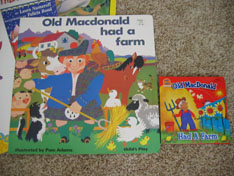
4. Begin with songs that allow the children to have fun and get their bodies moving to release their sillies! "Old MacDonald", "Itsy Bitsy Spider", "Johnny Hammers".


5. Read a fun story. Flap-books are great. Use different storytelling strategies. Puppets, clothesline, magnetic boards, felt boards, large books, books with props, or tell a story without the use of any book!


6. End circle with a few more songs. Or share stories/show and tell with each other. Finish the circle with a goodbye song.


Song - Goodbye Friends


Goodbye friends, Goodbye friends
Goodbye friends, we'll see you all next time.

Related Posts Plugin for WordPress, Blogger...