Sunday, June 24, 2012

Classroom Centres - Art Centre

So I have been away from my blog for nearly three weeks. I can't believe how fast time has gone by but I have been super busy with my family in the past month. However, I have found a bit of time today during putting in laundry loads and folding. 

Source: http://www.woodetccorp.com/R0042%20Art%20Center%20for%204.jpg

Here is my post about one of the most underrated centres of all time: The Art Centre. The art centre should be packed with all sorts of materials that you can touch, smell, hear, taste and see. 

I have walked into many classrooms and the art centre only has the regular materials: paint with an easel, crayons, markers, glue, construction paper, white paper, scissors, etc. What ever happened to using different kinds of art materials?? Here is my short list of materials that can be put into the classroom other than the regular paint, markers and crayons.


Large-knob paintbrushes for small hands. Allows for fine motor skills to become enhanced. 


Source: http://www.specialneedstoys.com.au/shop/images/stubby%20paint%20brushes.jpg


Different styles of paintbrushes. Allows children to experience different kids of painting with them.

Source: http://mailjust4me.com/crafts/paintbrushes.jpg


Funky brushes are awesome. They give out different textured results.
Source: https://blogger.googleusercontent.com/img/b/R29vZ2xl/AVvXsEgh4sQSLcvd7XJNQ_SgHClQD56THPZ4RIV5LFfR4aaorv1sfZszyGLGyGEOrFf2Bknn4yURU16bCjYNpWeS-2t_KtAeFhHZGP8xA3irlcYULeP8kjSkmj8rx8Ymwlvk3248U_wCm9woRnY/s1600/Alex-3-Funky-Brushes-PaintBrushes-For-Kids-With-Special-Needs.jpg


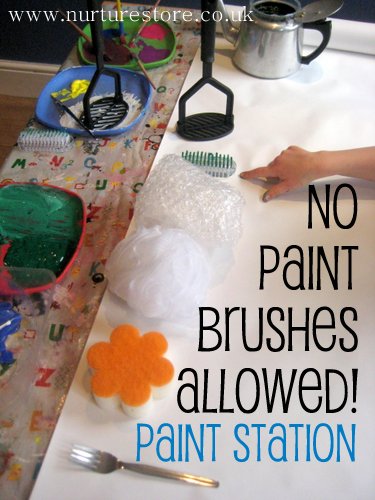
How about a week with no paintbrushes allowed! Find out different materials to use. The picture below shows awesome ideas.


Source: http://farm8.staticflickr.com/7271/7023496541_9ed36f173d.jpg

Spray bottle art! Add water and food coloring and spray away!

Source: http://totschool.shannons.org/wp-content/uploads/2010/11/CoffeeFilterSpray-7608.jpg


I was in love with watercolours when I was a kid. I don't know why we don't use these as much as we did back in the day. They are fun because they also give different results compared to poster paint.


Source: http://www.kidsart.com/store/paintimg/ryrsetwat200_x.jpg


Where have pastels gone? I know they get a little messy but the texture of it is amazing. And the whole point of childhood is to experience all that art has to offer!

Source: http://blog.thedrycleaner.com/wp-content/uploads/2012/04/82-preparing-pastels.jpg


Tissue Paper is fantastic.


Source: http://tissuepaperinfo.com/wp-content/uploads/2012/04/Colored-Wrapping-Tissue-Paper.87115339_std.jpg


Popsicle sticks. They are great for the block centre as well as the art centre. Allow children to experience and build all sorts of structures, animals and other creations.


Source: http://www.instructables.com/image/FEXES8LF9T3NR1D/Lincoln-Sticks-Popsicle-Stick-Log-Cabins.jpg


Feathers are wonderful to use to paint.


Source: http://www.lakeshorelearning.com/media/images/products/full/lc120_f.jpg


Don't forget good old chalk!


Source: http://www.toptenz.net/wp-content/uploads/2010/08/chalk.jpg


Use cotton balls to paint. Or create your own masterpiece by making snowballs/snowmen, etc.
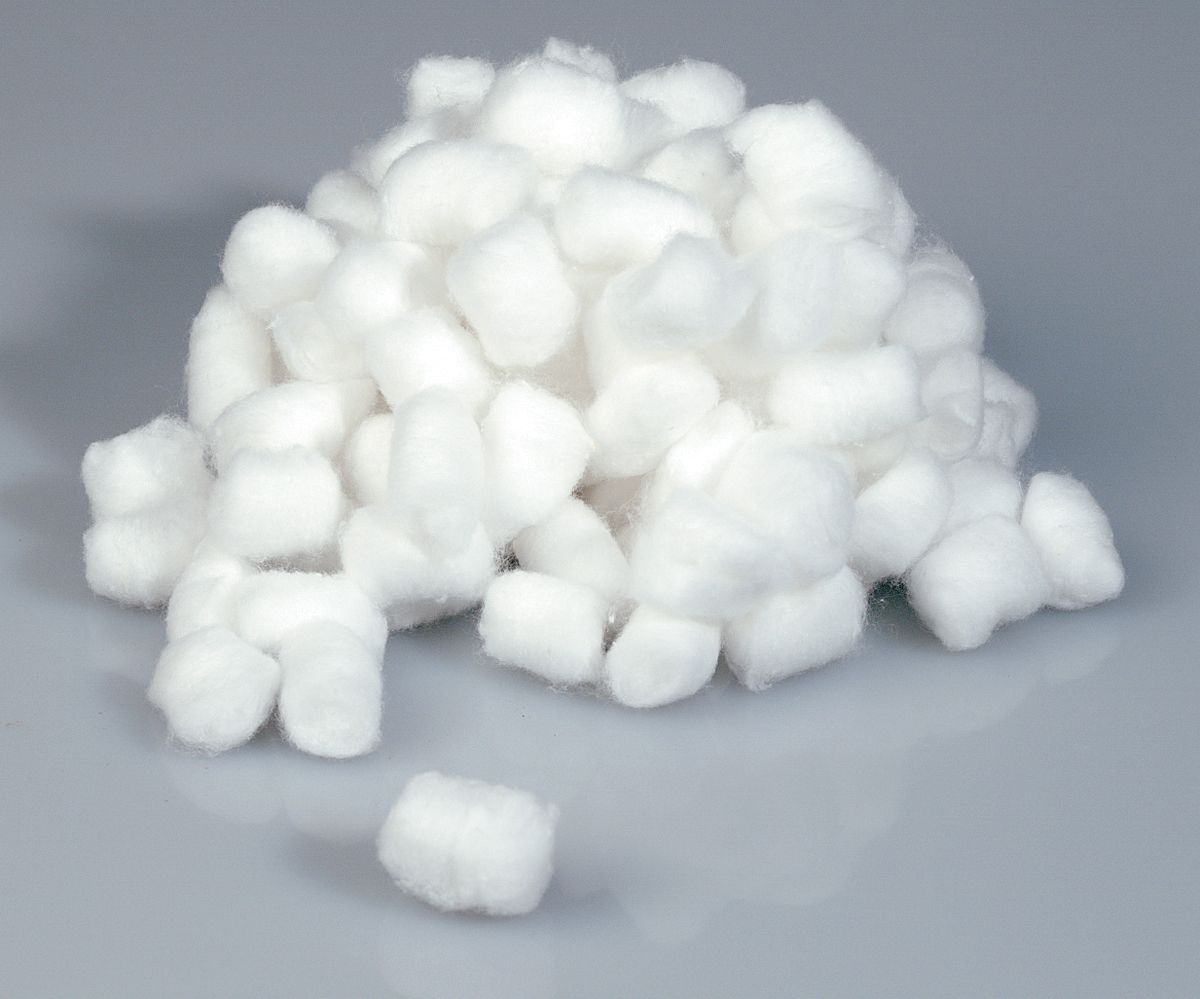
Source: http://headfullofhydrangeas.files.wordpress.com/2010/01/cotton-balls.jpg


Marbles. Great for painting. Take a big box. Put paper inside. Dip marbles in paint and then put inside the box. Move the box around so the marbles spread paint everywhere. Use different sizes marbles for better results.

Source: http://6bdanielasblog.weebly.com/uploads/8/7/8/0/8780862/2605895_orig.jpg

Coffee filters are great for painting, spray painting, food coloring art and markers. Use any materials to have fun.


Source: https://blogger.googleusercontent.com/img/b/R29vZ2xl/AVvXsEin-0ytzs-QAm7z-7GLu3qVw_gINPGZVY6wATqVmDT57u7_ySXlCLriIQmZ3xGin8vrWVp20bHrntjpTMhRR7vsgqzSZnF-fqmMPYIjaZQJzzWxjdvcl6ZnczLZdEtNNj5CFSApEExLo40/s1600/coffee_filters1.jpg


Tea bags are fantastic after they have been dipped in the water for a bit. The colors and the smell will mesmerize the children!


Source: http://agapeantiaging.com/wp-content/uploads/2012/03/tea-bags.jpg


I like to use glitter glue pens rather than glitter. It's a lot easier to clean up after!
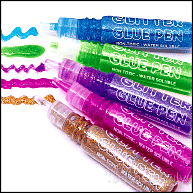

Source: https://blogger.googleusercontent.com/img/b/R29vZ2xl/AVvXsEjLjLm4cWoBy0M0ew-nlGxuF43-E0H7XocyggbTN1iVUjUY1g7L85jHfuw2KyOlBSLTNKf0XZNVBxBsWlz9eBEfTCcgpLEOmrDHas62jKD-4sxxV2Brs-TCedR1QYgN5n9GodUAxwFLkk8/s400/712.gif


Stickers! Kids will never tire of stickers.

Source: http://blogs.smarter.com/blogs/Stickers1.jpg


Threads and Yarns are good with paint as well. Also, these can be used to create necklaces/bracelets, etc.


Source: http://www.aurorasilk.com/yarns_and_threads/naturally_dyed/hemps/images/hempyarncolours.JPG


Buttons and beads are an art on their own. Use them to paint with or put through thread and yarn for jewelry.

Source: http://farm3.static.flickr.com/2373/2459497354_8065cfcd01_o.jpg


Stencils. Use spray bottles, paint or markers.


Source: http://blogs.smarter.com/blogs/Face%20Painting%20Stencil%20Set11.jpg


Shaving cream with food colouring is TONS of fun. The children don't get tired of touching the shaving cream because it is so soft!


Source: http://artfulparent.typepad.com/.a/6a00e55246b63f88340120a690b608970c-pi


Add food coloring instead of paint for art to change up the style of activities. 

Source: http://healingautismandadhd.files.wordpress.com/2011/03/food-coloring-300x300.jpg


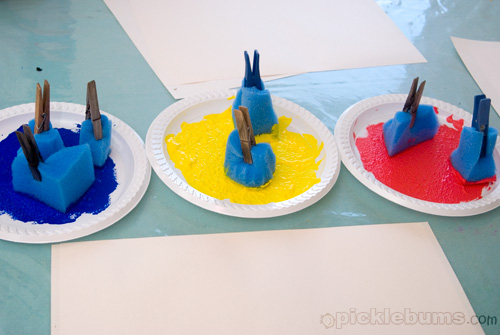
Home-made sponges with clothespins.

Source: http://picklebums.com/wp-content/uploads/2011/07/sponge-printing2.jpg


Bingo dabbers. 


Source: http://www.american-bingo.com/images/Bingo-Daubers/Ultima-Bingo-Daubers-4-Oz-sm.jpg


Finger stampers. Use with paint or use with playdough.


Source: http://www.alcoofcanada.net/images/T/Finger-Painter-Stampers-24-Pack-N16008_XL.jpg


Other kind of stampers.


Source: http://www.rainbowresource.com/products/036176.jpg


Different materials: pom poms, pipe cleaners, feathers, confetti, etc.


Source: http://www.littlecraftybugs.co.uk/images/XX%20KIT08.JPG

Another kind of stampers.


Source: http://www.lakeshorelearning.com/media/images/products/full/la536_f.jpg


Large knob stampers.


Source: http://ecx.images-amazon.com/images/I/51F%2BJMp4yUL._SL500_AA300_.jpg


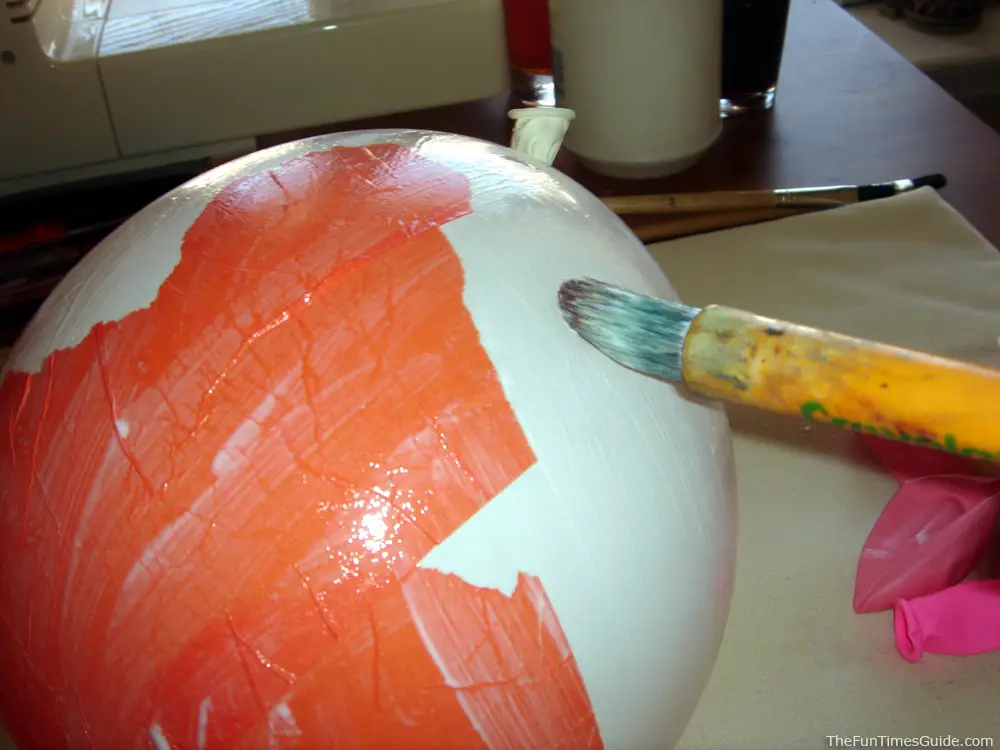
Paper mache. It's unfortunate we don't do enough of it anymore. 


Source: http://thefuntimesguide.com/images/blogs/paper-mache-pumpkin-craft.jpg


Clay.


Source: http://www.buzzle.com/img/articleImages/318224-12922-39.jpg


Playdough, of course.


Source: http://www.frugalcouponliving.com/wp-content/uploads/2010/08/playdough-homemade.jpg


Bubble painting! So much fun.

Source: http://www.worldslargestbubble.com/blog/wp-content/uploads/2012/05/bubble-art-colorful.jpg


Hope you enjoyed this post! Also, here is a link to different kind of art activities. It is a fantastic website!

Tuesday, June 5, 2012

Classroom Centres - Dramatic Area

Here is my post about one of my most favourite parts of the classroom: the dramatic centre! 

Source: http://seesawcenter.org/graphics/dramaticPlay_web.jpg

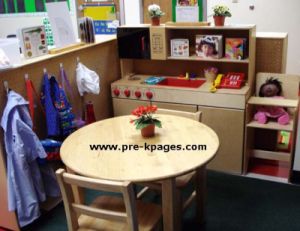
Dramatic play helps children interact with others or with themselves to create their own stories and plays. Sometimes children reenact events they have had in their lives or stories they have already heard. Watching them reenact these situations/stories gives the teachers an understanding of how much a child is able to: show the sequence of events, be creative, interact with others, problem solve, and see what their actions and words mean to them. 

Source: http://www.pre-kpages.com/images/drama_play1.jpg

Most dramatic centres have common props most of the time during the year. The home centre is a big one. In it, you can find dolls, babies, tables, chairs, play kitchens, play laundry and dryer machines, puppets, costumes/dress-up clothes, and toy kitchen supplies (plates, glasses, cutlery, fruits/vegetables). 

Source: http://www.thekcrew.net/storytellingchickachicka.JPG

The block centre and dramatic centre go hand-in-hand. Both centres require pretend play, and props helps to achieve this. Some other things that go in the dramatic/block centre are props that go along with a story that you have read. For example, if you read "The Three Little Pigs", you may want to add straw, sticks, and bricks to the block centre. This can incorporate lots of math concerning mass, weight, balance, construction, estimation, measuring, adding/subtracting, texture, capacity, sorting, etc. 

The picture above (with the story "Chicka Chicka Boom Boom") is another great book for props. You can put that in the dramatic centre or block centre which couples with literacy and math. For example, use the letters to count how many can the tree hold. Use other objects than the tree to see what will hold more or less. This even falls with science (is that tree magnetic for the letters to stick on? can we use materials?). The questions and ideas are too many to be written in one post. Experiment other things yourself and share what you have incorporated in your centres. 

Source: http://www.miltoncommunitynurseryschool.ca/images/DramaticCentreasCastle_lrg.jpg

The dramatic centre can be transformed into any kind of area you like. I have had the doctor's office, post office, camping, gardening, hair salon and the pet shop (to name in my dramatic centre. There are so many other ideas that I have done but I will instead post a list I found from a website (http://www.canteach.ca/elementary/drama8.html). Here are some ideas I really found interesting:


A

Airplane
Airport
Animal shelter
Aquarium
Art gallery
Artist's studio
Astronaut
Author's office

B

Baby's bath
Bakery
Barnyard
Beach
Beauty shop
Bedroom
Birthday party
Block center: props
Book Store
Boxes
Buried treasure/pirate
Bus or train

C

Camping
Candy shop
Car wash
Castle
Chinese restaurant
Christmas
Circus
Clown show
Construction
Covered wagon
Cowboys

D

Daddy shaving
Dancer
Dishwashing
Dress-up
Drive in

E

Easter bunny egg painting studio
Exercise club

F

Fairy tale land
Farm
Fast food
Film maker
Fire station
Fishing
Fix-it shop
Flower store

G

Garage
Gardening
Gas station
Getting ready in the morning
Gift wrapping
Grandma and grandpa
Grocery store

H

Hair salon
Halloween/costume shop
Haunted House
Hospital
Hot air balloon
House painters
Housecleaning

I

Ice cream truck
Ice-cream shop
Igloo

J

Jewelry making

K

Kitchen

L

Landscaper/yard work
Laundry
Library
Log cabin
Long house

M

Magic
Magic carpet
Make-up
Mall
Mermaid land
Movie Set
Movie theater
Museum

N

Newspaper office
Night and day
Nursery
Nursery rhymes play

O

Ocean
Office
Outer space

P

Palentologist
Parade
Park
Pet store
Photographer
Picnic
Pirates/buried treasure
Pizza parlor
Planetarium/observatory
Playing house
Police station
Post office
Puppet maker
Puppet show

R

Rainforest/jungle
Ranch
Ranger station
Recording studio
Research lab
Restaurant
Rock museum
Rocket
Radio station

S

Safari
Sailing/boats
Santa's workshop
School
School bus
Shadow puppets
Shoe repair
Show store
Sidewalk art sale
Sleigh
Soda fountain
Space station
Storyteller
Submarine

T

Talent show
Tea party
Theater
Time machine
Toy store
Travel agency
Treasure island
T.V. station

U

Under the sea

V

Voting
Vetrinarian's office

W

Wash day
Weather station/weather forecast
Western day
Winter wonderland

Z

Zoo


I know space is always an issue in the classroom when it comes to dramatic centres but if you ever have enough space, try to get your centre to look like this (not to mention getting a boat like that too!!): 


Source: http://www.appletreebytes.com/gonefishing.jpg


Sunday, May 27, 2012

Classroom Centres - Literacy Centre

I am going to do posts about each centre in the classroom. Here is a non-detailed, yet long post about the literacy centre.


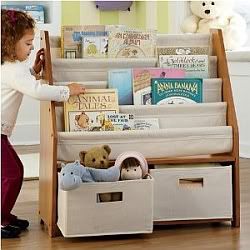
Source: http://notesonanapkin.files.wordpress.com/2008/09/reading-corner.jpg


A literacy centre consists of activities that allow the children to read and write. A lot of classrooms have reading centres and writing centres that are situated away from each other. Because reading and writing go hand-in-hand, I like to keep both centres very close to each other and call it the literacy centre.


Here are a FEW things that can be put into the literacy centre. Please check out my post about the block centre to find some activity ideas in the comment section. SIGRID was very nice to share some of her ideas. 


First and foremost, you need a reading nook. Children need to be comfortable when they are reading. It needs to be an area in the classroom where the least amount of sound is traveled to (Usually corners of the classroom are perfect for this). If possible, have cushions and pillows; my classroom also had teddy bears which the younger children loved reading with and to. 


The best part about the literacy centre is that it ties with any topic/theme you want children to explore. Therefore, there needs to be a wide variety of reading materials, not just books. Literacy in other words is communication; how we communicate with others (whether it be through written, oral or sign language). Here is my list of materials that can be added to or changed any time during the year.


Books! Add all sorts of books. Fiction, non-fiction and information books, picture books, open-the-flap books, I Spy books, Pop-up books, sketch books, poem books, nursery rhyme books, board books, sensory books, comic books, class books that your class has created, and books with NO words! Make sure you are using books that are appropriate for the child(ren)'s age and development. 


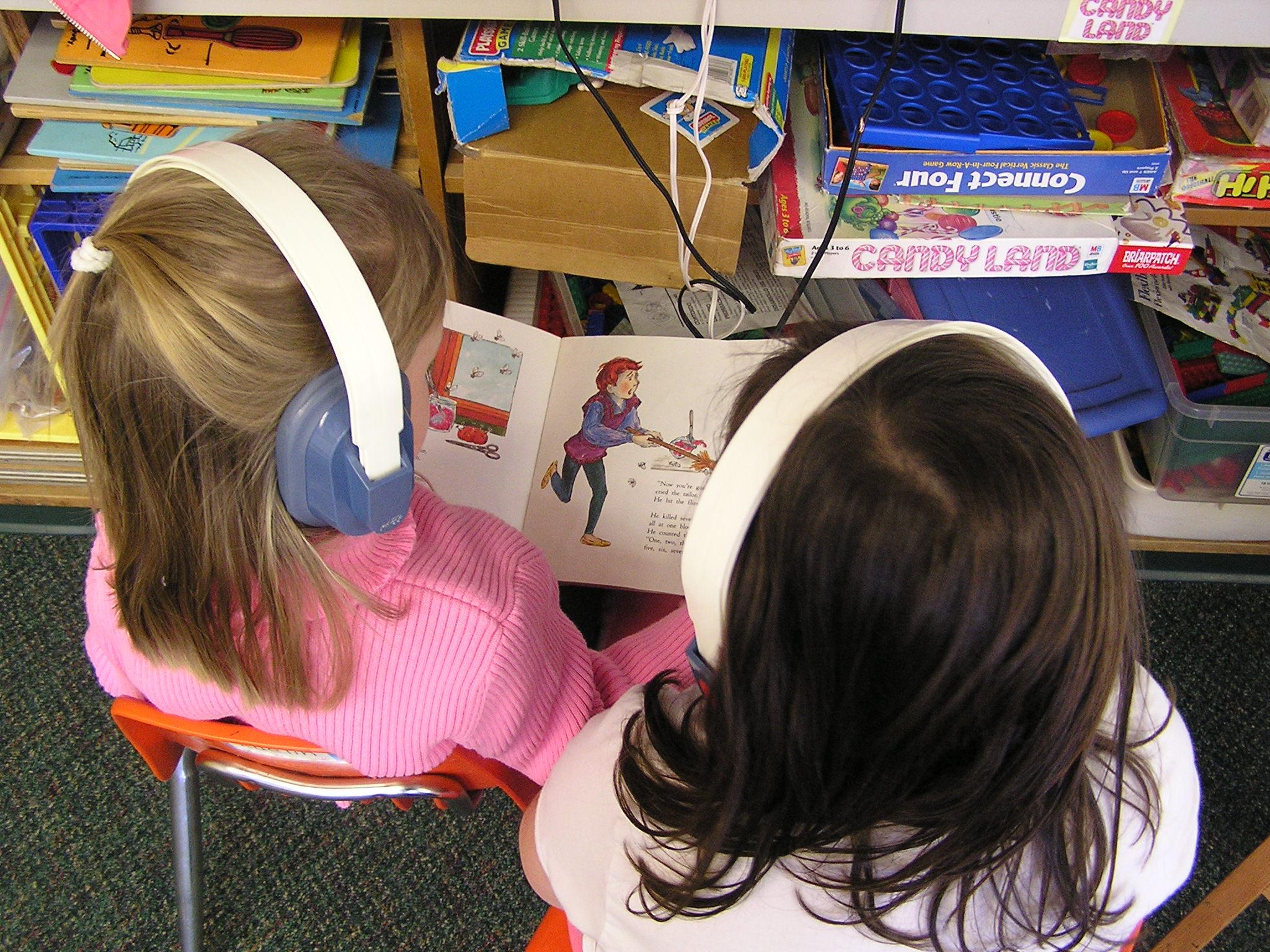
Source: http://spph.ubc.ca/sites/healthcare/uploads/blog/1325873818841.jpg


Books on Tape. This is a fantastic way for children to hear the words and expressions from a tape recorder/CD player as they follow along with the book. It, of course, promotes reading but also social skills when reading with a partner. Literacy skills involve knowing where the book begins and ends, which direction the words are written and when to flip the page. It enhances their hearing senses and their hand-eye coordination as they read and flip the pages. 

Source: http://ed551brandman.pbworks.com/f/1268027272/books%20on%20tape.jpg

Magazines

Source: http://www.asiaing.com/images/stories/2010/National.Geographic.Kids.Magazine.Subscription.jpg

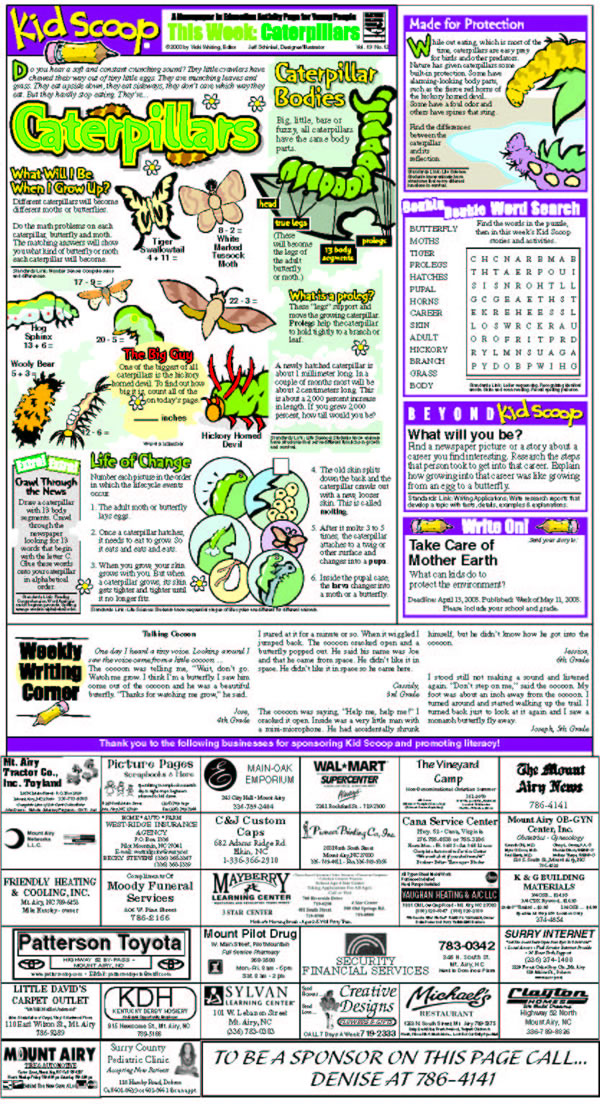
Newspapers. These are great for allowing children to see letters, numbers, pictures, comics, logic puzzles, etc. A great way for children to know their letters and words is to give them highlighters. Ask them to only find the letter 'Aa' for the day. Make sure you find appropriate articles for them. We cannot underestimate the learning abilities of children; they pick on everything, good and bad. 

Source: http://www.kwnews.com/images/kidscoop.jpg

Comics

Source: http://addanaccity.com/wordpress/wp-content/uploads/2011/11/AC-Comics-For-Kids-cover-300x287.jpg


Maps

Source: http://news.stanford.edu/news/2012/march/images/maps_news.jpg


Blueprints are GREAT for mapping as well. Children have so much fun with this if put into the literacy centre, specially if you are doing a unit on construction, mapping or structures.


Source: http://www.houseofmaupassant.com/sites/www.houseofmaupassant.com/local/cache-vignettes/L500xH393/plan_rdc-2-6493e.png

Brochures/Pamphlets

Source: http://factms.com/wp-content/uploads/2011/07/brochures_pamphlets_01.jpg


Other reading materials that can be put all around the centre are posters, pictures, manuals/directions on how to do/build something. Signs and advertisements are also a hit in the classrooms. 

Here are some materials that can be made into activities for children to increase their literacy skills/learning.


Board Games such as Scrabble, Monopoly, Bingo, etc. promote a lot of literacy, hand-eye coordination, fine motor skills, focus, and critical thinking.

Source: http://blog.picnicfun.com/articles/wp-content/uploads/2011/11/board_games1.jpg

Magnetic letters/numbers (plastic, foam, wood)

Source: http://ecx.images-amazon.com/images/I/51Ef95yvbWL._SL500_AA300_.jpg

Paper. All sorts of paper. Blank, coloured, construction, manila, newspaper, bristol board, cue cards, tissue paper, sand paper, paper towels, paper plates, envelopes, paper bags, line paper, scrapbook paper, wrapping paper, wax paper, coffee filters, etc. The list is endless! Using different materials makes learning FUN and EXCITING! Children get bored using line and blank paper all the time. To make it more fun, pick one day in a month and tell the students "today we are going to write upside down". Watch their expressions as confusion and exciting is jumbled up together into fun!

Source: http://www.museumwales.ac.uk/media/9137/thumb_400/sian-001.jpg

Writing material. Another endless list: their own FINGERS, pens, pencils, markers, pencil crayons, crayons, paint brushes, high lighters, chalk, pastels, etc. Make sure you are meeting children's developmental requirement for these materials. Look for non-toxic markers for safety and large-size writing materials for firmer grip. Their fine motor skills need to be strong in order for them to have a strong grasp. 

Source: http://img.ehowcdn.com/article-new/ehow/images/a07/tb/gc/different-kinds-erasers-800x800.jpg

Stencils and Stampers. Large sizes and knobs makes for a easier grip.

Source: http://di1-1.shoppingshadow.com/images/pi/25/9b/ea/41508660-260x260-0-0_Century+Novelty+Alphabet+Stencil+Ruler.jpg


Source: http://s7.orientaltrading.com/is/image/OrientalTrading/56_2302?$FULL_SIZE$

Computer/Printer. Many people have different views on using computers in the preschool environment. I personally believe these should be used as an AID for children with special or extra needs to build their fine muscles. Other than that, children should be engaged in activities that does not requires a computer. As soon as they hit kindergarten and above, they will be required to use computers for many things. *Please remember every child SHOULD be monitored when they are using the computer*

Source: http://www.cs.sfu.ca/CourseCentral/166/tjd/_images/desktop-computer.jpg


Typewriters. These have to be one of the coolest things in the classroom. Children can get inspired to learn about history and the evolution of technology. I would rather have the children spend time on typewriter than a computer! Lots of focus, hand-eye coordination and development of small muscles. 

Source: http://marcromanoff.files.wordpress.com/2012/02/typewriter.jpg

Dry/erase boards, felt boards, cork boards all promote good story telling. A variety of these in the classroom promote lots of literacy skills. 

Writing books, sketch books and journals are great for "traditional" writing and drawing. Again a variety of everything encourages the most learning. 

Art materials: Play dough, sand, salt, shaving cream and paint can all be used with children's fingers to trace out letters and numbers. It is a ton of fun. Keep scissors, erasers, glue and tape as well at a table where children will be doing their writing. These further develop fine motor muscles. 

Chalk boards, Clipboards and Doodle Pads: Again, these are great for children to get into the habit of literacy. The more opportunities they get, the more chance of learning earlier and obtaining strong skills. 


Well, there you have it. My post on literacy centres. It is not detailed as it only provides basics. I will be posting activities here and there about each centre as well. Be on the lookout! 

Related Posts Plugin for WordPress, Blogger...